
Shop Evergreen
Sheet, strip, rod, tube and structural shapes, by profile.

Evergreen make the polystyrene sheet, strip, rod, tube and channel that scratch-builders rely on. Easy to cut, shape and glue, it’s the go-to for architectural models, railway scenery and wargaming terrain.

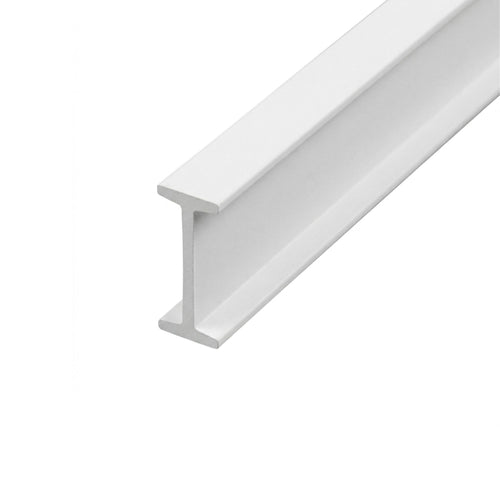
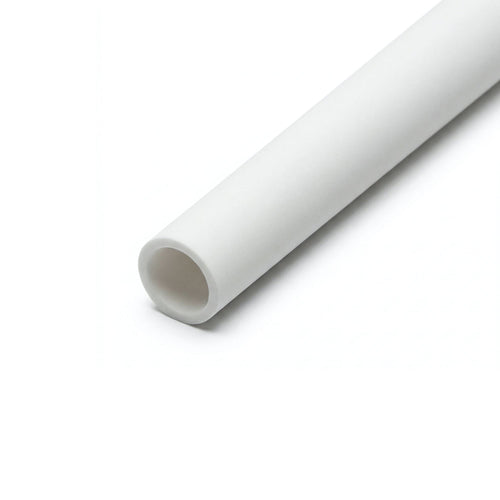
The whole Evergreen range is polystyrene in four forms. Choose the form first, then the size.

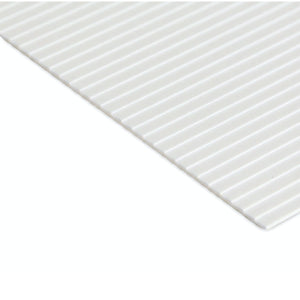
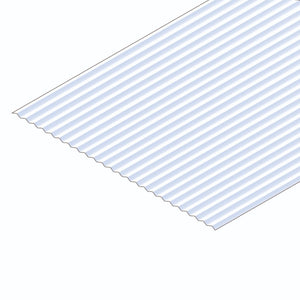
Flat stock for walls, floor plates and massing, plain or moulded to look like cladding, roofing and paving. Black, clear and coloured too.
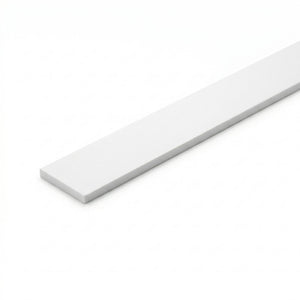
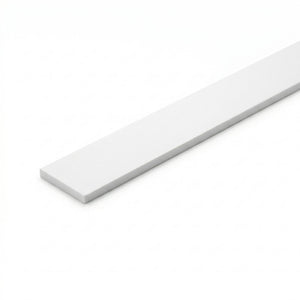
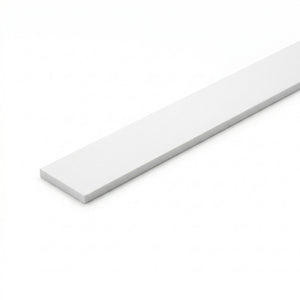
Window frames, mullions, bracing and scale timber, in exact thicknesses and widths.
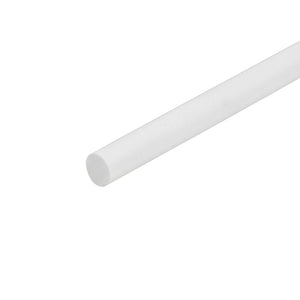


Solid rod for piping and columns, and tube in sizes that slide one inside the next.
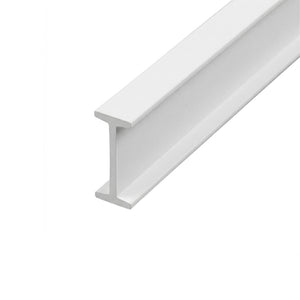
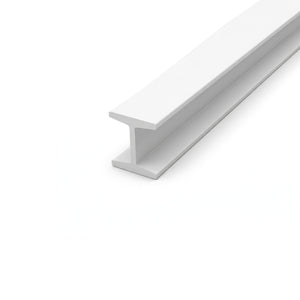
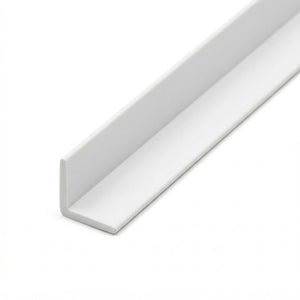
I-beams, H and T columns, channels and angle, for girders, roof trusses and bridge spans.
Plain white sheet is where most builds start: walls, floor plates and massing, ready to prime and paint as render, concrete or painted metal.
Textured sheet has the surface moulded in, so cladding, roofing and paving arrive finished rather than scribed by hand, in a range of spacings to match your scale.
Black and clear sheet do different jobs. Black gives a deep matt finish. Clear is for glazing, and the thinnest gauges curve without snapping.
| To model | Use |
|---|---|
| Rendered walls, floors, massing | Plain white sheet |
| Windows and skylights | Clear sheet |
| Weatherboard and clapboard | Clapboard siding |
| Vertical timber boarding | V-groove siding |
| Sheds, warehouses, factories | Corrugated metal siding |
| Metal roofs | Seam roofing |
| Tiled floors | Square tile sheet |
| Pavements and plazas | Sidewalk sheet |
Sized strip comes in exact thicknesses and widths, in 350mm or 600mm lengths, as Standard, Multi or Bulk packs.
Scale strip is sized to real timber at one scale: HO (1:87), S (1:64) or O (1:48). Framing comes out the right size without converting a single measurement.
Choose 600mm when a run would otherwise need a join.
| You are building | Use |
|---|---|
| Architectural models, any scale | Sized strip, 350mm |
| Long runs without a join | Sized strip, 600mm |
| HO railway, 1:87 | HO-scale strip |
| S scale, 1:64 | S-scale strip |
| O scale, 1:48 | O-scale strip |
Evergreen's own advice for working polystyrene. It is often quicker to work than wood, metal or card, and it never splinters.
Score the sheet on one side with a sharp knife, then snap it along the line. Thin sheet and strip can be cut straight through with a very sharp knife or a single-edge razor blade.
Styrene is joined with a solvent rather than glued. Hold the parts in position and touch a little cement to the joint with a fine brush (#000): capillary action draws it in and softens both faces, giving a bond as strong as the styrene itself. Use it sparingly. ZAP PT-104 plastic model cement does this job.
To fix styrene to other materials or to a painted surface, use a fast-setting epoxy or a cyanoacrylate super glue.
Rub coarse sandpaper over the surface in the direction of the grooves. It is easier while the styrene is still a large sheet. Wiggle the paper slightly for a surprisingly convincing weathered timber, then a light rub with fine paper removes any fuzz.
Spraying gives the best finish, especially for well-kept timber cladding or metal, and every type of model paint can be sprayed straight onto styrene. Clean the surface with alcohol and acrylics can go on directly. Pre-thinned airbrush paints are for spraying, not brushing. Paints made for military miniatures brush on well, in a wide range of colours that suit buildings.
Almost any weathering works on painted styrene. Spray the base colour's own paint to suggest mud and grime, or use casein, pastel chalk, acrylics or leather dyes in alcohol. For weathered timber, add the wood grain before painting, then pick it out with a thin wash of a darker colour.
There is more on all of this in the Evergreen How-To Book.
Many Evergreen sizes are given in inches. Evergreen's own specifications list every structural shape and tube in inches and millimetres, and the charts show what a size represents at each scale.
For styrene to styrene, a solvent cement such as ZAP PT-104: it welds the joint rather than gluing it. For styrene to foam, wood or MDF, a contact adhesive; to a painted surface, epoxy or super glue.
Usually too much solvent on a large flat area. Use less cement, brace walls from behind, and vent closed structures so the air inside is not trapped.
An odd-numbered round tube slides into the next odd number, and an even-numbered one into the next even number: 223 inside 225, 224 inside 226. Square and rectangular tube telescope too. Every size is in the tube table above.
The bag of odds and ends is half a pound of mixed factory offcuts: sheet, siding, strip, rod and tube. The mix changes from bag to bag.
Styrene can turn brittle after long exposure to sunlight, so keep finished models out of direct sun.
Sheet, strip, rod, tube and structural shapes, by profile.


